
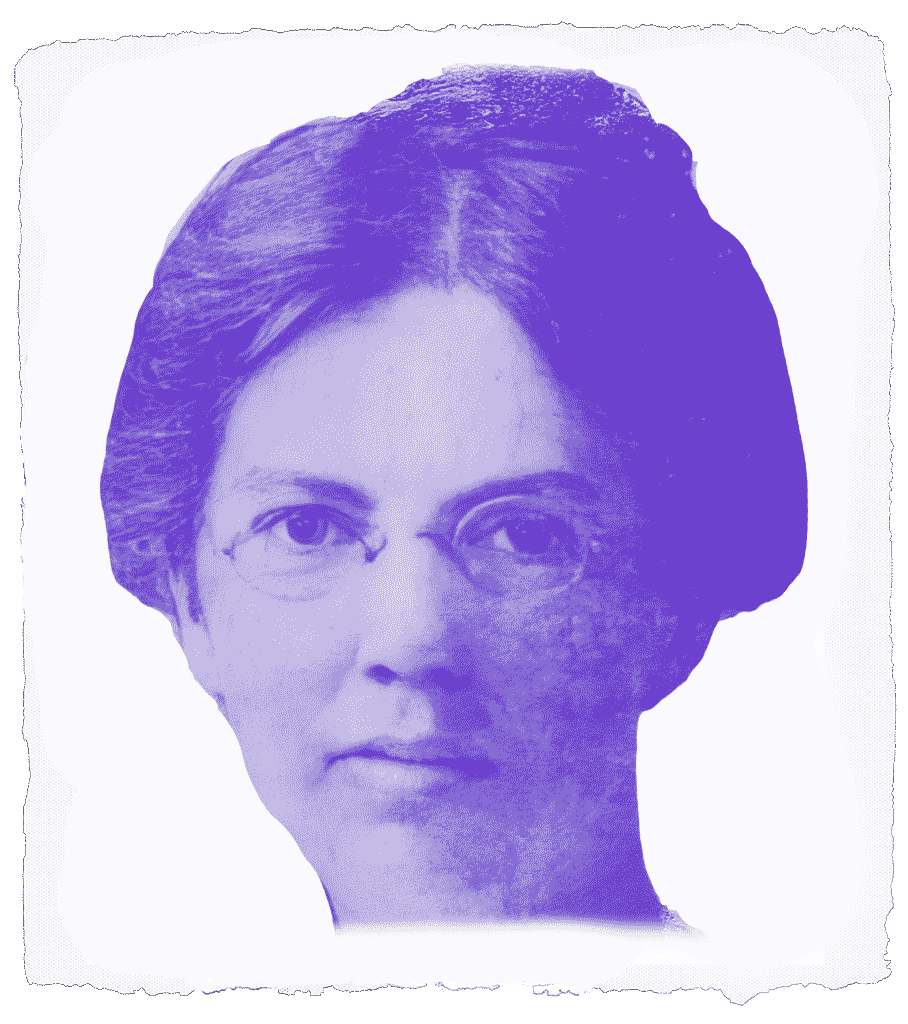
Champion of Critical Thinking in Mediumship Investigation
Amy Tanner (1870–1956) a psychologist and researcher active in the early 20th century, made significant contributions to the field of paranormal investigation. Her work, though often overlooked, helped shape the scientific approach to studying alleged supernatural phenomena.
This updated resource guide aims to put all relevant information about Amy Tanner’s contributions to fields of paranormal study in one place.
What did Amy Tanner do that was so influential?
- Amy Tanner conducted rigorous investigations of famous mediums.
- Amy Tanner published influential critiques of Spiritualist séances and psychical research.
- Amy Tanner contributed to the development of scientific methods in paranormal research.
1. Amy Tanner conducted rigorous investigations of famous mediums.
Amy E. Tanner, along with her colleague G. Stanley Hall, carried out extensive investigations of renowned mediums of her time, most notably Leonora Piper. Piper was a famous American trance medium who had garnered significant attention from psychical researchers, including William James.
Amy and Stanley conducted a series of sittings with Leonora Piper in 1909, meticulously documenting their observations. Their approach was characterized by a critical and skeptical mindset, aiming to uncover any potential natural explanations for Piper’s purported abilities.
Unlike some of her contemporaries who were more sympathetic to Spiritualist claims, Amy maintained a rigorous scientific approach. She carefully analyzed medium performances, looking for signs of cold reading, fishing for information, and other mentalist techniques that could explain the medium’s apparent insights.
Tanner’s work with Leonora Piper exemplifies the importance of thorough, unbiased investigation in paranormal research. Her methods set a standard for future researchers in the field, emphasizing the need for careful observation and critical analysis.
2. Amy Tanner published influential critiques of Spiritualist séances and psychical research.
In 1910, Amy published Studies in Spiritism, a comprehensive examination of the major figures and claims in the psychical research movement. This book was a landmark publication that aimed to expose the flaws and potential frauds in spiritualist practices.
In her book, Amy provides detailed accounts of her investigations, including the sessions with Leonora Piper. She offered natural explanations for many of the phenomena reported by Spiritualists and psychical researchers, arguing that these could be attributed to psychological factors rather than supernatural causes.
Studies in Spiritism is not just a critique of specific mediums or phenomena, but a broader examination of the methods and assumptions of psychical research. Amy questioned the scientific validity of many practices in the field and highlighted the potential for self-deception among both mediums and researchers.
The publication of Amy’s book marked an important moment in the history of paranormal investigation. It represented a shift towards a more skeptical, psychologically-informed approach to studying alleged supernatural phenomena. Tanner’s work influenced future generations of researchers and helped establish a more critical framework for evaluating paranormal claims.
3. Amy Tanner contributed to the development of scientific methods in paranormal research.
Through her investigations and writings, Tanner played a crucial role in advancing scientific methodologies in paranormal research. She emphasized the importance of controlled conditions, careful documentation, and consideration of alternative explanations.
Amy’s work with G. Stanley Hall on the Piper case demonstrated the value of collaborative research in paranormal investigations. Their approach, which combined psychological expertise with rigorous observational techniques, set a precedent for future studies in the field.
Amy’s critiques helped highlight the need for more robust experimental designs in psychical research. By pointing out the flaws in existing methods, she encouraged researchers to develop more stringent protocols.
Amy’s contributions to the field extended beyond her own investigations. By publishing her findings and methodologies, she provided a template for future researchers to follow. Her work also helped bridge the gap between mainstream psychology and parapsychology by encouraging a more scientific approach to strange phenomena.
Amy E. Tanner’s contributions to field of parapsychology are significant for paranormal researchers seeking to separate signal from noise. Her work, though sometimes overshadowed by more famous male contemporaries, played a crucial role in shaping the scientific approach to studying supernatural claims.
Read More . . .
 PARANORMAL WOMEN: A Hidden History