Preserving Supernatural Lore in Southeast Alaska
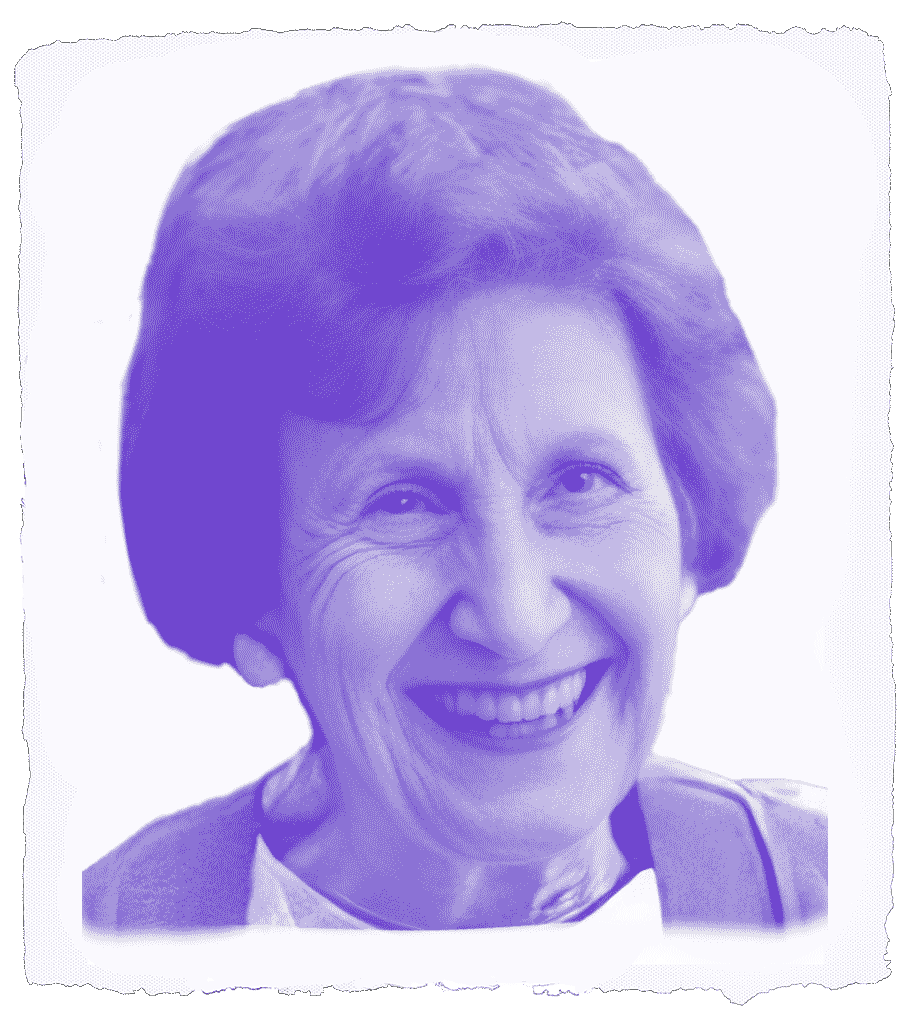
Mary Louise Giraudo Beck (1924-2024) spent decades documenting the rich oral traditions of Alaska’s Tlingit and Haida peoples, ensuring their stories of shamans, shape-shifting spirits, and ancestral wisdom survived colonization. Though less known in mainstream paranormal circles, her work bridges cultural anthropology and supernatural folklore, offering a unique lens into Indigenous cosmologies.
This updated resource guide aims to put all relevant information about Mary Beck’s contributions to fields of paranormal study in one place.
What did Mary Beck do that was so influential?
- Mary Beck documented shamanic traditions and Kushtaka encounters.
- Mary Beck respected Indigenous Cosmologies as Classical Mythology.
- Mary Beck preserved oral histories for future paranormal research.
1. Mary Beck documented shamanic traditions and Kushtaka encounters.
Mary Beck’s 1991 book Shamans and Kushtakas: North Coast Tales of the Supernatural explores the Tlingit and Haida belief systems, where shamans served as mediators between the physical and spiritual worlds. She documented rituals, healing practices, and encounters with Kushtakas, usually malevolent shape-shifting beings said to lure victims to their deaths in the Alaskan wilderness. These accounts preserved Indigenous understandings of supernatural forces, contrasting Western paranormal frameworks while highlighting universal themes of spiritual conflict.
Mary’s writing emphasized the moral and ecological lessons embedded in these stories, such as the consequences of disrespecting nature or hubris toward unseen powers. Her work remains a primary source for researchers studying cross-cultural parallels in supernatural folklore.
2. Mary Beck respected Indigenous Cosmologies as Classical Mythology.
In Heroes and Heroines of Tlingit-Haida Legend (1989), Mary drew parallels between Northwest Coast narratives and Greco-Roman myths. For example, she compared the Tlingit hero Natsilane, a figure who harnesses spiritual power to create the killer whale, to Prometheus, who defied gods to empower humanity. By framing these stories within a global mythological context, Beck challenges the marginalization of Indigenous cosmologies and underscored their relevance to broader discussions about humanity’s relationship with the unseen.
This comparative approach invites paranormal enthusiasts to consider how archetypal themes—heroism, betrayal, communion with spirits—recur across cultures, enriching debates about the universality of supernatural belief.
3. Mary Beck preserved oral histories for future paranormal research.
Mary’s meticulous recording of oral traditions ensured that stories once shared only in communal gatherings became accessible to modern audiences. For instance, her accounts of Tlingit interactions with European explorers—like the 1786 encounter with French navigator La Pérouse—blend historical events with supernatural interpretations, such as mistaking sailors for divine beings. These narratives provide invaluable insights into how Indigenous communities interpreted unexplained phenomena through a spiritual lens.
Her preservation efforts, supported by her role as a professor at the University of Alaska, created a foundation for interdisciplinary studies linking anthropology, folklore, and paranormal research.
Mary Beck’s scholarship challenges us to expand the paranormal field beyond Euro-centric ghost stories and consider how Indigenous cosmologies redefine concepts like hauntings, possession, and spiritual warfare. Her legacy reminds us that every culture holds keys to understanding humanity’s enduring fascination with the unseen.
Read More . . .
 PARANORMAL WOMEN: A Hidden History