
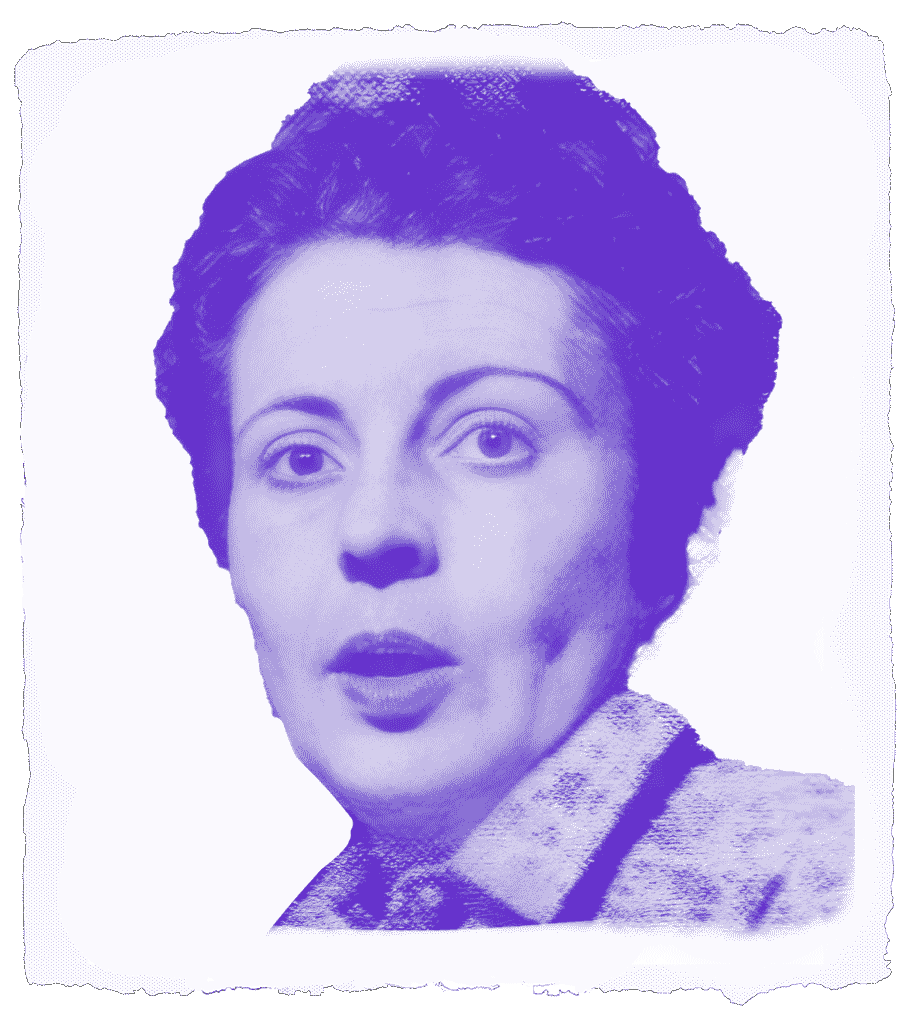
Editorial Force Behind American Parapsychology
Editorial authority. Dream telepathy. Collaborative scholarship. Laura Dale (1919-1983) may not be a household name, but for decades she shaped the academic foundation of parapsychology in America through her steady leadership and research contributions. As the editor of the Journal of the American Society of Psychical Research (ASPR), Laura shaped U.S. parapsychology research for more than two decades.
This updated resource guide aims to put all relevant information about Laura Dale’s contributions to fields of paranormal study in one place.
What did Laura Dale do that was so influential?
- Laura Dale edited the ASPR’s Journal for 25 years.
- Laura Dale conducted research on dream telepathy and proxy mediumship.
- Laura Dale collaborated on foundational parapsychology primers with Gardner Murphy and Rhea White.
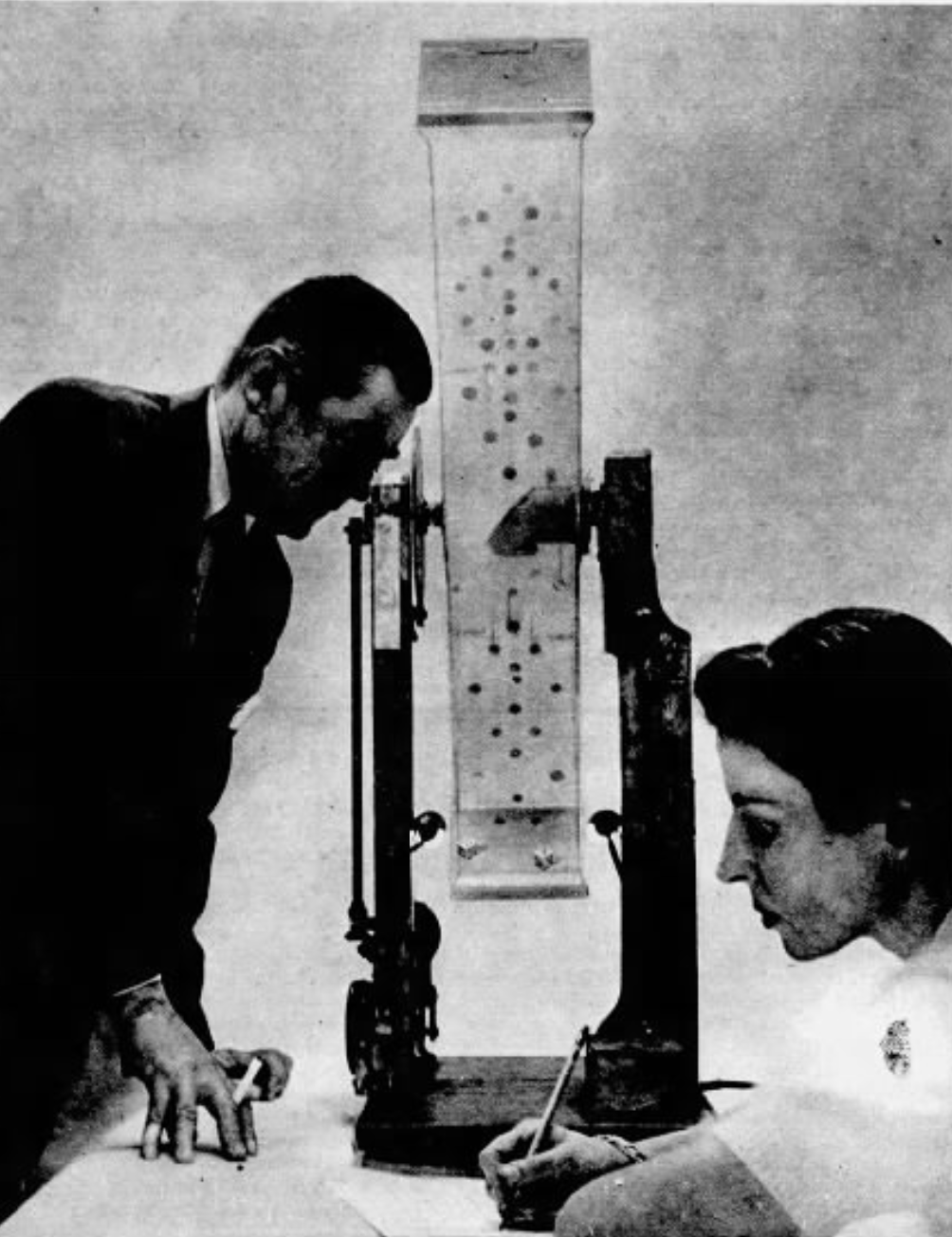
1. Laura Dale edited the ASPR’s Journal for 25 years.
For a quarter-century, Laura Abbott Dale served as the editorial force behind one of the most respected scholarly publications in the field of paranormal research. Her role as editor of the American Society for Psychical Research (ASPR) Journal placed her at the intellectual crossroads of parapsychology during a crucial period of its development in the mid-20th century.
Born August 22, 1919, in Cornwall, New York, Laura received her education at private schools in New York City before pursuing studies at the prestigious Sorbonne in Paris. Her international education provided her with a cosmopolitan perspective that would later serve her well in evaluating research from various cultural and intellectual traditions.
Laura first assumed editorial duties at the ASPR Journal in 1941, launching what would become a remarkably influential career. Though she temporarily stepped away from the editorship in 1947 to focus on her research projects and clinical work at Maimonides Hospital in Brooklyn, she maintained active involvement in the journal’s production. This period of clinical work at Maimonides’ Department of Psychiatry helped strengthen her understanding of the psychological dimensions of paranormal experiences—knowledge that would later inform her editorial decisions.
In 1960, Laura took a three-year hiatus from the ASPR staff when she relocated to Long Island. During this period, she served as an editorial associate at University Books in New York, working on their publication program devoted to psychical research. This experience deepened her understanding of how to effectively communicate complex parapsychological concepts to a broader audience.
Laura returned to the ASPR in 1963, resuming her editorial responsibilities for both the Journal and the organization’s Proceedings. Her dedication to maintaining rigorous scholarly standards earned her tremendous respect within the field. By the time of her death on February 2, 1983, she had helped shape nearly three decades of parapsychological discourse, earning recognition as the “First Lady of Parapsychology” according to a memorial article in the European Journal of Parapsychology.
During her editorial tenure, Laura maintained correspondence with many of the field’s leading researchers, including Ian Stevenson, who acknowledged her contributions to his papers on apparitions and survival evidence. Her editorial stewardship helped establish the ASPR Journal as a venue where both supportive and skeptical perspectives on paranormal phenomena could be thoughtfully examined.
2. Laura Dale conducted research on dream telepathy and proxy mediumship.
Beyond her editorial contributions, Laura established herself as a significant researcher in her own right. Her experimental work focused particularly on two fascinating areas of parapsychological inquiry: dream telepathy and proxy sittings with mediums.
Dream telepathy—the purported transmission of information between individuals during sleep states—represented an intriguing frontier in parapsychological research. Laura’s investigations in this area contributed to a growing body of evidence suggesting that psi phenomena might function differently during altered states of consciousness. This work foreshadowed the more famous dream telepathy experiments later conducted at Maimonides Medical Center, where Laura had previously worked as a clinical assistant.
Perhaps even more significant was Laura’s work with renowned medium Eileen Garrett in conducting proxy sittings. In these experiments, a third party (the “proxy”) would sit with a medium on behalf of another person who was seeking communication with the deceased. The proxy would typically have minimal information about the sitter or the deceased individual they hoped to contact, theoretically reducing the possibility of cold reading or information leakage.
Laura’s rigorous protocols in these proxy experiments helped address some of the methodological critiques commonly leveled against mediumship research. Her work with Garrett—herself a controversial but influential figure in psychical research—demonstrated Laura’s willingness to engage directly with the phenomena rather than limiting herself to theoretical analysis or editorial commentary.
Beginning in 1948, Laura became closely involved with the medical section of the ASPR, bringing her research interests into productive dialogue with medical and psychiatric professionals. This interdisciplinary approach characterized much of her experimental work and reflected her conviction that paranormal phenomena deserved serious scientific investigation.
As author or coauthor of numerous papers published in the ASPR Journal, Laura documented her findings and contributed to the development of experimental methods in parapsychology. Her charter membership in the Parapsychological Association—a professional organization later affiliated with the American Association for the Advancement of Science—further underscored her commitment to advancing the field’s scientific credibility..
3. Laura Dale collaborated on foundational parapsychology primers with Gardner Murphy and Rhea White.
Perhaps Laura’s most enduring contribution to parapsychological literature were her collaborations. In 1961, she published Challenge of Psychical Research: A Primer of Parapsychology with Gardner Murphy, a fellow parapsychologist and husband of Lois Barclay Murphy. This influential book provided an accessible yet scholarly introduction to the field for both academic and general audiences.
Challenge of Psychical Research covers topics ranging from telepathy and clairvoyance to psychokinesis and survival research. Throughout, Laura’s editorial expertise ensured that complex concepts were presented clearly without sacrificing nuance or scholarly integrity. The book’s balanced treatment of controversial topics reflected Laura’s own approach as journal editor—neither dismissive skepticism nor uncritical acceptance, but careful, evidence-based analysis.
In 1973, Laura and Rhea White compiled Parapsychology: Sources of Information, a comprehensive bibliography. This 302-page resource offers 325 annotated references to English-language materials, including 282 books, 30 encyclopedias, and 13 periodicals. The book also covers organizations, scientific recognition of parapsychology by academic institutions and other disciplines, opportunities for graduate work, and listings of dissertations and theses.
Read More . . .

