

Novelist Turned Psychical Investigator
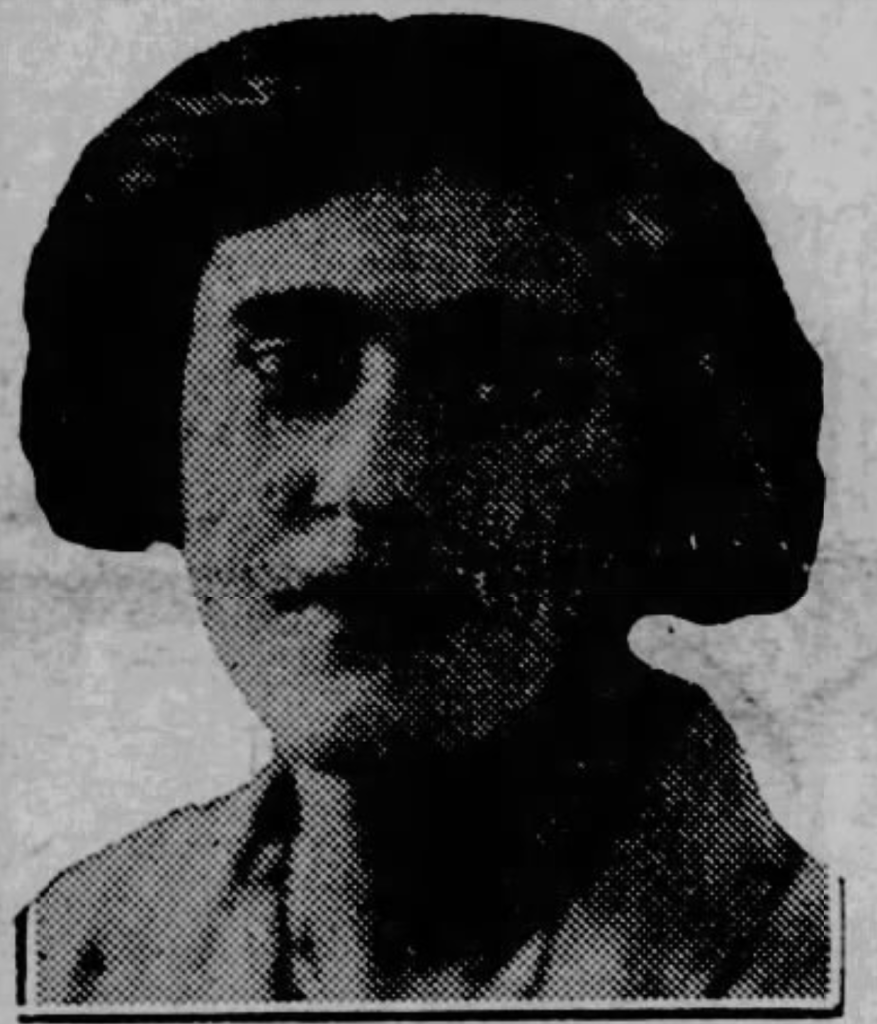
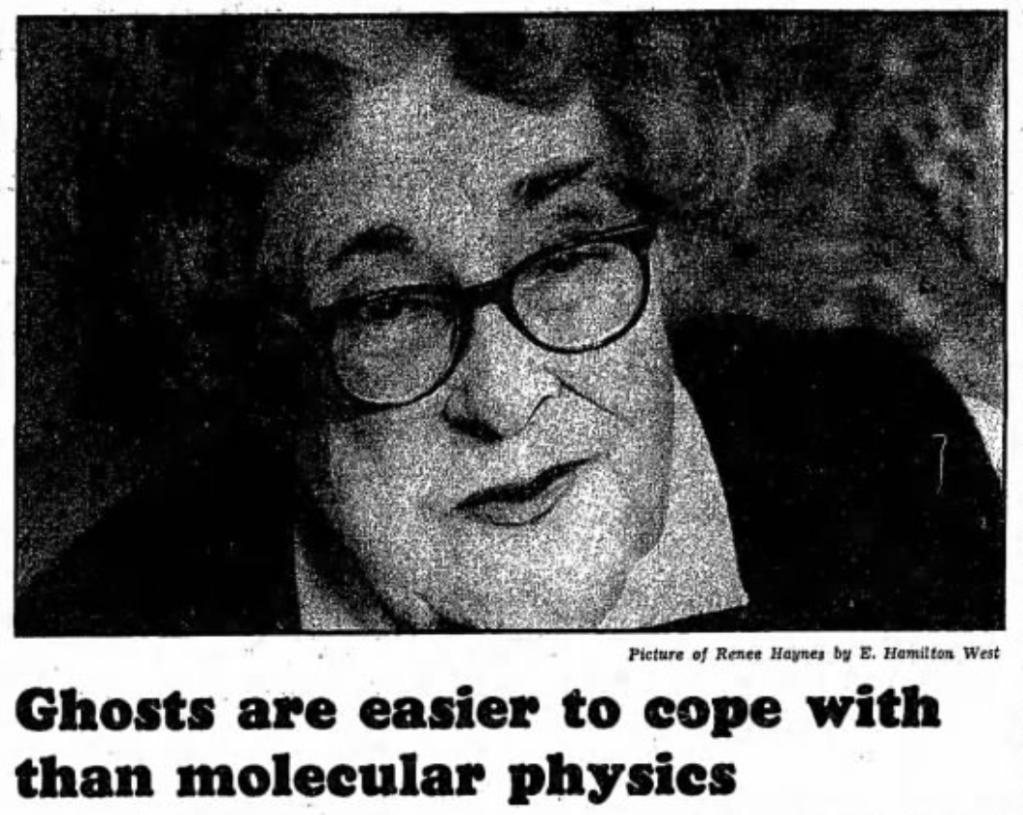
Renée Haynes (1906–1994) was a British novelist, historian, and psychical researcher renowned for her contributions to the study of paranormal phenomena. The great granddaughter of T.H. Huxley (the skeptical scientist who popularized agnosticism), Renée developed a profound interest in psychical research that would define her career.
This updated resource guide aims to put all relevant information about Renée Haynes’s contributions to fields of paranormal study in one place.
What did Renée Haynes do that was so influential?
- Renée Haynes introduced the “boggle threshold” concept.
- Renée Haynes studied ESP in humans and non-humans.
- Renée Haynes was a leader and editor of the Society for Psychical Research.
1. Renée Haynes introduced the “boggle threshold” concept.
Perhaps Renée’s most enduring contribution to parapsychology is her coining of the term “boggle threshold.” This concept, which has become fundamental in discussions of paranormal phenomena, refers to the point at which a person’s tolerance for anomalous claims turns to disbelief. Renée recognized that this threshold varies significantly from one individual to another, creating a spectrum of acceptance across different populations when confronted with claims of paranormal experiences.
The boggle threshold concept elegantly captures the psychological dimension of how humans process information that challenges their existing worldview. When encountering phenomena that stretch beyond conventional understanding, people reach different breaking points where they simply cannot accept further anomalies. This insight has proven invaluable for parapsychologists attempting to understand why some individuals readily accept paranormal claims while others remain steadfastly skeptical despite similar evidence.
What makes Renée’s contribution particularly significant is how it shifted the conversation from purely evidence-based arguments to include considerations of psychological predispositions. By acknowledging the subjective nature of belief formation, she helped bridge the gap between scientific methodology and the human experience of the unexplained. The term continues to be widely used in parapsychological literature and discussions, demonstrating the lasting impact of Renée’s conceptual innovation.

2. Renée Haynes studied ESP in humans and non-humans.
Renée’s scholarly output on psychical research spans decades and represents a substantial body of work that has educated both researchers and the general public. Her 1961 book The Hidden Springs: An Enquiry into Extra-Sensory Perception (revised in 1973) explored spontaneous psychic experiences in both human and non-humans, including dogs and cats. Renée was inspired in part by her own vivid precognitive dreams. This work demonstrated her preference for examining spontaneous phenomena over laboratory-controlled experiments, a stance that distinguished her approach from many of her contemporaries.
In 1976, she published The Seeing Eye, the Seeing I: Perception, Sensory and Extra-sensory, further developing her ideas about how humans perceive and process both ordinary and extraordinary sensory information. This exploration of perception helped establish theoretical frameworks for understanding how people experience and interpret potentially paranormal events.
However, her most significant literary contribution may be The Society for Psychical Research, 1882-1982: A History, published to commemorate the centennial of the SPR. This comprehensive account documented the evolution of organized psychical research through one of its most important institutions. While some critics noted that the work could have been better documented, it successfully introduced the general public to the existence and activities of the SPR, spreading awareness of the scientific investigation of paranormal claims.
Renée’s literary approach was characterized by her skepticism toward over reliance on statistical methods and computer analysis. She famously stated that “there is undue reverence for that sacred object the computer,” preferring instead to focus on individual human experiences and their meaning. This stance occasionally drew criticism from colleagues who favored more quantitative approaches, but it also ensured that the human dimension of psychical experiences remained central to the discourse.
3. Renée Haynes was a leader and editor of the Society for Psychical Research.
Renée’s practical influence on the field of parapsychology was perhaps most directly exercised through her leadership roles within the Society for Psychical Research (SPR). After joining the SPR in 1946, she quickly became an active and respected member. By 1957, she had secured a position on the organization’s council, where she could help shape its research agenda and institutional priorities.
In 1958, like so many women profiled on this website, Renée made a foreign researcher’s work accessible using her language skills. She translated Omez Reginald’s book entitled Psychical Phenomena to English from the original French.
Renée’s influence over the SPR expanded significantly in 1970 when she became editor of the society’s Journal and Proceedings, a position she held until 1981. For over a decade, Renée determined which research would be published and how it would be presented to both the academic community and interested public. This editorial role gave her substantial power to influence the direction of psychical research during a crucial period when the field was striving for greater scientific legitimacy while maintaining its distinctive focus on anomalous phenomena.
In addition to her council membership and editorial responsibilities, Haynes also served as a vice president of the SPR. This formal recognition of her contributions positioned her as one of the organization’s most visible representatives and authoritative voices. Through these leadership positions, she helped maintain the SPR’s continued relevance and shaped how psychical research was conducted and communicated during the latter half of the twentieth century.
Read More . . .
- Psychical Phenomena (1958, translator of Omez Reginald’s work)
- The Hidden Springs: An Enquiry into Extra-Sensory Perception (1961)
- The Seeing Eye, the Seeing I: Perception, Sensory and Extra-sensory (1976)
- The Society for Psychical Research, 1882-1982: A History (1982)
 PARANORMAL WOMEN: A Hidden History